China Top Battery Management System Manufacturers?

Time:2026-09-17 Author:Madeline
0%

China has become a major production base for battery management systems used in electric vehicles, energy storage, industrial equipment, and portable power products. This article examines China’s top Battery Management System manufacturers through practical, evidence-based criteria. The focus is not only on factory scale. Engineering capability matters more.

A dependable supplier should demonstrate accurate voltage monitoring, stable temperature sensing, balanced cell control, and reliable communication interfaces. Technical documents should explain measurement accuracy, operating limits, protection logic, and software update procedures. Details matter. Factory audits can reveal testing equipment, production discipline, and traceability practices that brochures often overlook. Certifications and independent test reports also deserve careful review. They can support credibility, but they should never replace technical verification.

Real-world experience adds another layer. A system used in a warehouse vehicle may face different demands from one installed in a residential energy-storage cabinet. Strong manufacturers usually provide sample testing, parameter configuration, fault analysis, and responsive after-sales support. Their engineers should understand thermal behavior, charging profiles, cell chemistry, and integration risks. Communication quality is important too. Delayed answers can become costly during commissioning.

No ranking is perfect. Manufacturer capabilities change with product lines, market conditions, and research investment. Some companies may excel in customized projects, while others offer stronger standardized platforms. Buyers should compare performance data, production consistency, service records, and application experience before making a decision. This overview aims to create a practical starting point, not an unquestionable verdict. Independent validation remains necessary, especially when safety, uptime, and long-term battery performance are involved.
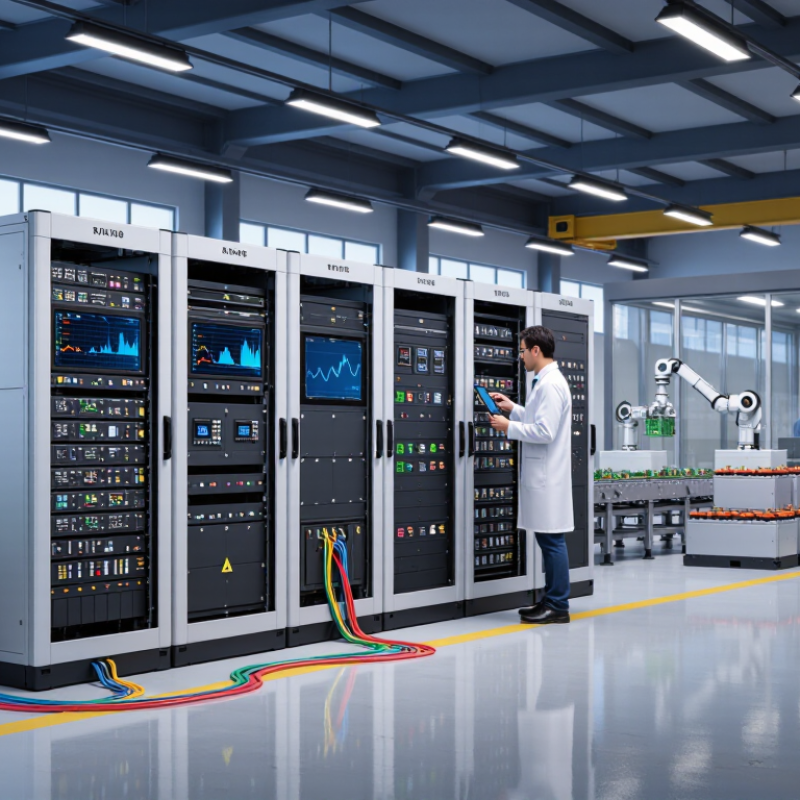
China Top Battery Management System Manufacturers?

What Is a Battery Management System and Why Is It Important?

What Is a Battery Management System and Why Is It Important?

A battery management system, or BMS, acts as the battery pack’s control center. It monitors voltage, current, temperature, and state of charge for individual cells. It also balances cells, controls charging, and disconnects the pack during dangerous conditions. Without this supervision, one weak cell can heat faster than its neighbors. Small errors can become expensive failures.

The International Energy Agency reported nearly 14 million electric cars sold globally in 2023. BloombergNEF’s 2023 Battery Price Survey recorded an average pack price of 139 US dollars per kWh. As battery systems become larger and more affordable, BMS accuracy becomes more important. A reliable system can extend usable battery life and support safer operation. It can also improve range estimates, although these estimates are never perfect. Temperature changes, aging, and driving habits still confuse the software. That limitation deserves attention.

Tips: Check whether the BMS measures cells individually. Ask about temperature sensors and fault records. Review balancing performance, not only software features. China’s battery manufacturers often compete through scale and integration, but technical documentation still matters. Independent testing can reveal weaknesses that product brochures overlook. Do not judge a BMS by screen design alone. Reliable protection is usually quiet, continuous, and difficult to notice.

How China’s Battery Management System Industry Has Developed

China Top Battery Management System Manufacturers?

China’s battery management system industry developed alongside its fast-growing new-energy vehicle market. The China Association of Automobile Manufacturers reported 9.5 million new-energy vehicle sales in 2023. That volume created demanding conditions for cell monitoring, thermal control, and fault diagnosis. Early systems mainly protected batteries from overcharge and deep discharge. Current platforms increasingly use cloud connectivity, predictive algorithms, and finer voltage measurements.

The International Energy Agency’s Global EV Outlook 2024 estimated that China represented about 60% of global electric-car sales in 2023. It also reported global electric-vehicle battery demand above 750 GWh that year, with China holding the largest share. This manufacturing scale encouraged local suppliers to build integrated hardware and software teams. They now test systems under winter temperatures, fast charging, vibration, and uneven cell aging. A driver may never notice the BMS working. The warning can appear within seconds.

60%
of global electric-car sales represented by China in 2023

Industry development has not been perfectly linear. Price pressure sometimes encourages simpler components, while advanced safety requires more sensors and validation. The China Automotive Battery Innovation Alliance recorded approximately 387.7 GWh of power-battery installations in China during 2023. That figure shows the market’s scale, but it does not automatically prove software reliability. Field data, traceable testing, and clearer lifecycle records still need improvement. In practice, leading manufacturers are moving from basic protection boards toward adaptive energy-management platforms, though performance can vary across vehicle models and operating conditions.

Key Technologies Used by Leading Chinese BMS Manufacturers

China’s leading battery management system manufacturers are investing in layered sensing, estimation, and safety control. The reason is practical. The IEA reported that China produced over 75% of global battery cells in 2023. This scale creates demanding conditions for BMS reliability, especially in high-volume electric vehicles.

Modern systems measure cell voltage, current, temperature, and insulation resistance continuously. High-precision voltage sampling helps detect weak cells before capacity loss becomes obvious. Extended Kalman filters estimate state of charge under changing loads. Machine-learning models can improve state-of-health prediction, but they still need reliable field data. Cell balancing also matters. Passive balancing wastes energy, while active balancing can redistribute charge between cells more efficiently. Neither approach is perfect.

Thermal management is becoming more intelligent. Distributed sensors, cooling controls, and early gas detection can identify abnormal heat patterns. Functional-safety engineering follows standards such as ISO 26262. Cybersecurity protection increasingly follows ISO/SAE 21434. The IEA’s Global EV Outlook 2024 noted that electric car sales exceeded 14 million worldwide in 2023, increasing pressure on diagnostic accuracy and remote service tools. Cloud-connected BMS platforms now compare operating histories across fleets. Yet connectivity introduces privacy and attack-surface concerns. BloombergNEF reported average lithium-ion pack prices of 115 dollars per kilowatt-hour in 2024. Cost pressure remains intense. Some manufacturers may still prioritize lower component costs over deeper validation. That trade-off deserves closer technical review.

China’s Top Battery Management System Manufacturers and Their Strengths

China’s top battery management system manufacturers compete through practical engineering, stable production, and fast customization. Leading suppliers develop systems for electric vehicles, energy storage cabinets, industrial equipment, and low-voltage mobility. Their strengths often include accurate voltage sensing, passive or active cell balancing, thermal monitoring, and protection against overcurrent or short circuits. These functions help prevent uneven charging and extend battery service life.

Experienced manufacturers usually maintain testing facilities for vibration, temperature cycling, insulation, and communication reliability. Engineers may test a control unit at 25°C, then repeat the process below freezing and above 50°C. This reveals weaknesses that laboratory demonstrations can hide. Strong suppliers also support CAN, RS485, and wireless communication, allowing battery data to reach inverters, chargers, or vehicle controllers. Firmware updates and traceable production records improve long-term maintenance.

Cost efficiency is another advantage, but it should not become the only selection point. Some technical sheets look impressive. Real performance depends on calibration, software logic, connector quality, and factory inspection. A supplier with flexible engineering support can adjust sampling speed, balancing current, or safety thresholds for a specific battery pack. Yet even reliable manufacturers may need better documentation or faster after-sales communication. Buyers should review test reports, sample results, warranty terms, and field experience before approving large orders. Reliability is proven over time.

China’s Top Battery Management System Manufacturers and Their Strengths

Battery management systems are commonly designed around the electrical characteristics of different lithium-ion chemistries. The chart compares typical nominal voltage and maximum charging voltage for major cell chemistries, highlighting the voltage-management requirements that BMS manufacturers must support across energy storage, electric mobility, and industrial applications.

How to Evaluate and Select a Chinese BMS Manufacturer

How to Evaluate and Select a Chinese BMS Manufacturer

Choosing a Chinese battery management system manufacturer requires more than comparing prices. Start by defining the battery chemistry, voltage range, current load, communication protocol, and operating temperature. A reliable supplier should explain these limits clearly, not hide them behind impressive specifications. Ask for test records covering overvoltage, undervoltage, short-circuit protection, thermal behavior, and balancing accuracy.

Request evidence of engineering capability. Review sample schematics, firmware revision controls, calibration methods, and production inspection procedures. During a factory visit, observe whether workers use traceable equipment and documented checks. Small details matter, such as labeled test fixtures and sealed connectors. Confirm the supplier’s experience with similar battery sizes and real operating conditions. Certifications should match your target market and product category. Certificates alone are not enough.

Communication quality often reveals future risks. Ask how the team handles software changes, field failures, warranty claims, and replacement parts. Require a written development schedule with clear acceptance tests. Run independent testing on pilot units before placing a large order.

We once trusted a promising prototype too quickly; its balancing performance changed under cold conditions. That mistake taught us to test beyond the laboratory.

No manufacturer is perfect, and your evaluation should allow room for technical disagreement. A capable partner will discuss weaknesses openly and provide measurable corrective actions.

FAQS

What does a modern battery management system monitor?

It continuously monitors cell voltage, current, temperature, and insulation resistance. These readings reveal weak cells and abnormal electrical conditions. Small errors matter.

How does a BMS estimate battery charge?

It combines measured data with estimation algorithms. Extended Kalman filters can estimate charge during changing loads. Results still depend on accurate sensors.

Why is cell balancing important?

Balancing reduces differences between cells during charging. Passive balancing releases extra energy as heat. Active balancing transfers energy between cells more efficiently. Neither method is perfect.

How do BMS manufacturers improve thermal safety?

They use distributed temperature sensors, cooling controls, and early gas detection. A system may detect unusual heat near one module. Fast detection can limit wider damage.

What communication features should a BMS support?

Common options include CAN, RS485, and wireless communication. These links connect batteries with chargers, inverters, and vehicle controllers. Communication failures can be surprisingly costly.

How should buyers evaluate a Chinese BMS manufacturer?

Define battery chemistry, voltage range, current load, and temperature limits first. Request test records for short circuits, overvoltage, undervoltage, and balancing accuracy. Clear limits are more useful than impressive wording.

What factory testing should buyers review?

Look for vibration, temperature cycling, insulation, and communication tests. A unit may operate at 25°C, below freezing, and above 50°C. Ask for traceable inspection records.

Are certifications enough when selecting a manufacturer?

No. Certifications support compliance, but they cannot prove field reliability. Review calibration methods, firmware controls, sample results, warranty terms, and real operating experience.

Why are pilot tests necessary before large orders?

Pilot units expose problems hidden by laboratory demonstrations. One prototype may balance correctly when warm but perform differently in cold conditions. We trusted one too quickly.

What should buyers expect from a reliable supplier?

A capable supplier explains weaknesses and provides measurable corrective actions. Ask about software changes, field failures, replacement parts, and warranty claims. Good communication is not optional.

Conclusion

A Battery Management System is the control center of a battery pack, responsible for monitoring voltage, current, temperature, charging status, and overall battery health. It protects cells from overcharging, deep discharge, overheating, and imbalance while improving safety, reliability, and service life. China’s BMS industry has developed rapidly alongside the growth of electric vehicles, energy storage, industrial equipment, and portable power applications. This progress has encouraged manufacturers to improve product quality, production capacity, and technical integration.

Leading Chinese BMS manufacturers commonly apply technologies such as real-time data monitoring, cell balancing, thermal protection, communication interfaces, fault diagnosis, and intelligent software management. When evaluating a supplier, buyers should consider technical expertise, product compatibility, safety certifications, testing procedures, customization capabilities, manufacturing consistency, after-sales support, and total cost. A suitable manufacturer should be able to provide stable performance, clear documentation, responsive communication, and solutions that match the battery chemistry, application environment, and expected operating conditions.

Madeline

Madeline

Madeline is a dedicated marketing professional with a wealth of expertise in our company's core offerings. With a keen understanding of the industry, she brings a unique perspective to her role, consistently delivering high-quality content that highlights the superior aspects of our products. As......