China Top 10 Power Conditioning Equipment Suppliers?

Time:2026-09-22 Author:Oliver
0%

Choosing reliable Power Conditioning Equipment suppliers in China requires more than comparing product brochures. Voltage fluctuations, harmonic distortion, and unstable loads can quietly damage sensitive equipment. A practical evaluation should consider performance, safety, service response, and long-term operating costs.

This guide introduces ten notable Chinese suppliers serving industrial, commercial, and data-center applications. The selection focuses on manufacturers with documented experience, defined testing procedures, and a visible record of technical support. Their product ranges may include voltage stabilizers, isolation transformers, active harmonic filters, surge protection devices, and uninterruptible power systems. Buyers should inspect efficiency figures, load capacity, protection functions, certifications, and warranty terms. A factory visit can reveal details that a website cannot, such as wiring quality, calibration practices, and final inspection discipline.

A neat ranking can mislead.

Supplier strengths vary by project. One company may excel in high-power industrial systems, while another offers better customization for laboratories or communication rooms. Claims should be checked against test reports, reference projects, and clear delivery records. Prices also require careful interpretation. A lower quotation may exclude commissioning, spare parts, software, or on-site training. This overview provides a useful starting point, not a substitute for engineering validation. Readers should confirm local compliance requirements and request technical documentation before making a purchase decision. That step is easy to overlook.
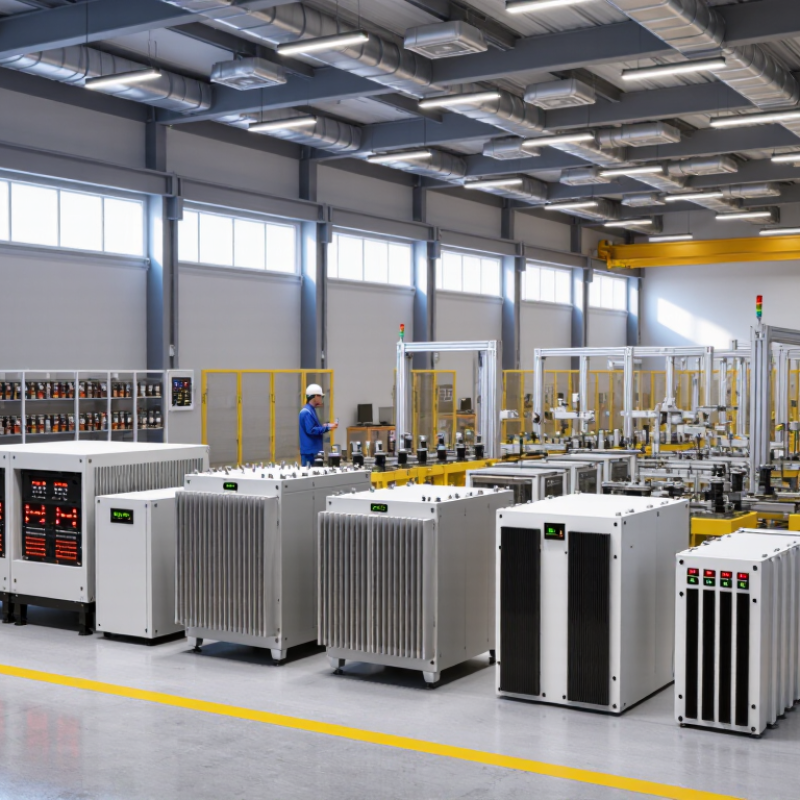
China Top 10 Power Conditioning Equipment Suppliers?

What Power Conditioning Equipment Covers in China

China’s power conditioning equipment covers more than backup batteries. It includes uninterruptible power supplies, voltage regulators, surge protection devices, harmonic filters, isolation transformers, power factor correction units, and monitoring software. These systems protect sensitive loads from voltage dips, electrical noise, frequency changes, and brief interruptions. The boundary is not perfectly clean. Some suppliers classify distribution panels as conditioning equipment, while others treat them as separate infrastructure.

Demand is expanding with China’s factories, hospitals, telecommunications networks, and data centers. The International Energy Agency reported that China represented about 60% of global electricity demand growth in 2023. That growth increases pressure on equipment reliability and power quality. The China Electricity Council recorded national electricity consumption above 9 trillion kilowatt-hours in 2023. Such scale makes small disturbances expensive, especially in automated production lines.

Data centers require stricter control. Uptime Institute’s 2024 Global Data Center Survey found that many reported outages still caused serious financial damage, with a significant share exceeding 100,000 US dollars. Equipment selection should therefore examine response time, efficiency, battery autonomy, thermal performance, and maintenance access. Field experience also shows a common weakness: specifications may look impressive, but poor grounding and overloaded circuits reduce real protection. Supplier comparisons should include tested performance, local service capacity, spare parts, and monitoring compatibility. Paper compliance alone is not enough.

China Power Conditioning Equipment: 50 Hz / 220 V Reference Waveform

Power conditioning equipment used in China commonly addresses voltage regulation, uninterrupted power supply, electrical isolation, harmonic filtering, surge protection, frequency conversion, and power-quality monitoring. This chart uses the national low-voltage single-phase reference of 220 V RMS at 50 Hz. The calculated peak voltage is approximately 311 V.

One complete 50 Hz cycle lasts 20 milliseconds. The waveform represents a nominal reference supply rather than supplier sales, market share, or brand-specific performance data.

How China’s Leading Suppliers Are Evaluated

China Top 10 Power Conditioning Equipment Suppliers: How China’s Leading Suppliers Are Evaluated

Evaluating Chinese suppliers requires more than checking price or factory size. A credible assessment combines field experience, engineering evidence, and independent documentation. Uptime Institute’s 2024 Annual Outage Analysis reported that 54% of serious outages cost more than US$100,000. Around one in five exceeded US$1 million. These figures make voltage stability, backup performance, and service response commercial issues, not only technical details.

Reviewers should examine regulation accuracy, harmonic distortion, overload protection, battery autonomy, and thermal behavior. Test records should follow relevant IEC 62040 requirements and local electrical codes. Suppliers should also provide traceable component data, factory quality records, and failure-rate evidence. ISO 9001 certification helps, but it does not prove field reliability. That distinction is often missed. A stronger evaluation includes witnessed testing at 25°C and higher temperatures, with loads shifting from 30% to 100%. Response time matters too. A twelve-hour service promise may sound useful, yet spare-parts location can matter more.

Tips: Request three years of service data. Compare identical test conditions. Check whether efficiency claims include battery charging. Ask for a real installation reference, not a staged showroom video. No ranking is perfect. Customer maintenance quality can distort results, and suppliers may report data selectively. Buyers should record these uncertainties instead of hiding them.

China Top 10 Power Conditioning Equipment Suppliers? - How China’s Leading Suppliers Are Evaluated
No. Evaluation Dimension Weight What Is Evaluated Recognized Standard or Reference Required Evidence and Scoring Basis
1 Product Safety and Compliance 15% Electrical safety, insulation, temperature rise, leakage current, short-circuit protection, and protection against abnormal operating conditions. IEC 62040 for UPS systems; IEC 62368-1 may apply to applicable ICT and audio/video equipment. Valid laboratory test reports, declarations of conformity, product safety certificates, and traceable model numbers. Full points require documentation covering the offered product family.
2 Power Quality Performance 14% Output voltage regulation, frequency stability, waveform distortion, response to load changes, and compatibility with sensitive electronic loads. IEC 61000-4-30 for power-quality measurement methods; applicable UPS performance requirements are addressed in IEC 62040. Independent test data showing voltage regulation, total harmonic distortion, transient response, and test conditions. Results must identify load level and operating mode.
3 Surge and Transient Protection 10% Protection against voltage surges, switching transients, lightning-related disturbances, and common-mode or differential-mode interference. IEC 61643-11 for low-voltage surge protective devices; IEC 61000-4-5 for surge-immunity testing. Clamping-voltage data, nominal discharge-current ratings, maximum continuous operating voltage, test reports, and replaceable protection-module information where applicable.
4 Energy Efficiency and Operating Cost 10% Conversion efficiency, no-load consumption, energy-saving modes, thermal losses, and total cost of ownership during normal operation. IEC 62040 efficiency test methods for UPS equipment; published input and output operating conditions should be clearly defined. Verified efficiency curves at multiple load levels, standby consumption figures, cooling requirements, and a transparent calculation of estimated annual energy use.
5 Reliability and Service Life 12% Component quality, thermal design, operating history, failure controls, preventive maintenance requirements, and expected service continuity. ISO 9001 quality-management practices; reliability claims should be supported by documented test methods rather than unsupported MTBF statements. Production burn-in records, accelerated-life or environmental test results, failure-rate data, corrective-action records, and clearly stated operating limits.
6 Manufacturing and Quality Control 10% Incoming inspection, process controls, final testing, calibration management, traceability, and control of outsourced components. ISO 9001 quality-management certification and documented inspection procedures. Current certification scope, factory-audit results, sampling plans, calibration certificates, serial-number traceability, and nonconformance-management records.
7 Configuration and Customization Capability 8% Input and output voltage options, frequency compatibility, enclosure design, communication interfaces, bypass configurations, and integration with monitoring systems. IEC 60529 for enclosure ingress-protection ratings where an IP rating is specified; IEC 61000 series for electromagnetic compatibility requirements. Approved technical drawings, interface protocols, customization lead times, change-control procedures, and documented validation of modified designs.
8 Delivery Capacity and Supply Continuity 8% Production capacity, component availability, lead-time consistency, inventory strategy, export readiness, and business-continuity planning. Supplier qualification should be based on auditable production and supply-chain records rather than marketing claims. Capacity statements supported by production records, average and maximum lead times, approved supplier controls, continuity plans, and on-time-delivery history.
9 Warranty and Technical Support 7% Warranty duration, response time, spare-parts availability, remote diagnostics, field-service coverage, and maintenance documentation. Contractual service-level agreements and written warranty terms; support obligations should be stated separately from product specifications. Sample warranty, escalation procedure, service-response targets, spare-parts list, repair workflow, training materials, and documented after-sales contact channels.
10 Environmental and Regulatory Responsibility 6% Restricted substances, recycling information, battery transportation compliance where relevant, environmental management, and product end-of-life practices. RoHS requirements where applicable; ISO 14001 supports environmental-management evaluation; UN 38.3 applies to applicable lithium battery transport testing. Material declarations, environmental-management certificates, battery test documentation where applicable, recycling instructions, and evidence of controlled waste handling.

China’s Top 10 Power Conditioning Equipment Suppliers

China’s Top 10 Power Conditioning Equipment Suppliers represent a broad manufacturing sector, not one fixed ranking. These suppliers commonly produce voltage stabilizers, isolation transformers, harmonic filters, surge protection units, and uninterruptible power systems. Their equipment supports data centers, medical facilities, factories, laboratories, and commercial buildings. The exact order changes with export experience, testing capacity, and after-sales performance.

A reliable supplier should provide documented efficiency, response time, overload protection, and operating temperature ranges. Ask for factory test reports, calibration records, and independent certification. A practical site visit may reveal more than a polished catalog. Check wiring quality, cabinet ventilation, labeling, and spare-parts storage. Engineers should also review load profiles before selecting equipment. A device rated for 500 kVA may struggle with motor-starting currents. That detail matters.

Some manufacturers offer remote monitoring and customized enclosures for dusty or humid environments. Others focus on compact systems for sensitive instruments. During evaluation, compare harmonic performance under partial loads, not only full-load figures. Request installation references from similar facilities. Be careful with impressive claims. They may omit maintenance intervals or battery replacement costs. Even experienced buyers can overlook local service response times. A lower purchase price may become expensive after repeated faults. Supplier reliability depends on evidence, not promises.

Products, Technologies, and Industries Served

China’s leading power conditioning equipment suppliers offer more than standard UPS units. Their product ranges often include voltage stabilizers, surge protectors, harmonic filters, isolation transformers, and power distribution units. Many also provide active power filters and static transfer switches for sensitive loads. Field conditions matter. A reliable supplier should explain capacity, backup time, overload performance, and maintenance access in clear terms.

Modern systems increasingly use double-conversion UPS designs, digital signal processing, and high-efficiency IGBT technology. Lithium battery systems can reduce floor space, while remote monitoring helps engineers track temperature, voltage, alarms, and battery health. Some suppliers develop modular platforms, allowing capacity to expand without replacing the entire installation. The details matter. Factory testing, thermal checks, load simulation, and documented quality procedures provide stronger evidence than attractive product brochures.

These solutions serve data centers, hospitals, semiconductor plants, telecommunications networks, rail systems, commercial buildings, and renewable energy facilities. Manufacturing sites may need harmonic control for variable-speed drives. Hospitals usually require stable power for imaging equipment and life-support systems. Data centers focus on redundancy, fast transfer, and predictable maintenance. In practice, supplier selection is rarely simple. A technically strong product may still perform poorly when installation guidance or local service is weak. I have seen specifications look complete, yet omit battery aging assumptions and ambient temperature limits. Those omissions deserve careful questions before procurement.

How to Choose the Right Chinese Supplier

Choosing among China’s power conditioning equipment suppliers requires more than comparing prices. The International Energy Agency’s Electricity 2024 report estimates data-center electricity use could exceed 1,000 TWh globally by 2026. That pressure makes voltage stability, efficiency, and service response commercially important. A supplier should explain its design assumptions, not just provide a polished catalog.

Request recent test reports for efficiency, overload performance, harmonic distortion, thermal endurance, and protection functions. Check alignment with IEC 62040 or other applicable standards. Confirm whether testing occurred in an independent, accredited laboratory. ISO 9001 certification supports process control, but it does not prove product quality. Review the certificate scope and audit date. Small details matter. Ask for serial-number traceability, component change notices, and failure-analysis records. The Uptime Institute’s Global Data Center Survey 2024 reported that power-related issues remain a leading cause of serious outages, reinforcing the value of preventive maintenance and documented reliability practices.

Visit the factory, or arrange a live video audit covering incoming inspection, assembly, burn-in testing, and final packing. Compare the quoted warranty with actual response times, spare-parts storage, remote diagnostics, and technician coverage. Supplier claims about MTBF should be checked against field data and operating conditions. A low quotation can still become expensive through downtime, shipping delays, or incompatible firmware. No scorecard is perfect. I would weight technical evidence and service capability more heavily than presentation quality, while keeping a small pilot order before scaling. Ask difficult questions early. Silence is useful evidence.

FAQS

What does power conditioning equipment include in China?

It includes uninterruptible power supplies, voltage regulators, surge protectors, harmonic filters, and isolation transformers.

Why is demand for power conditioning equipment growing?

China’s factories, hospitals, networks, and data centers consume enormous amounts of electricity.

What electrical problems can these systems protect against?

They can reduce damage from voltage dips, electrical noise, frequency changes, surges, and brief interruptions.

What should data centers examine before choosing equipment?

Buyers should examine response time, efficiency, battery autonomy, thermal performance, and maintenance access.

Why are grounding and circuit capacity important?

Poor grounding can weaken protection against electrical noise and surges.

How should buyers compare supplier performance?

Compare regulation accuracy, harmonic distortion, overload protection, battery autonomy, and thermal behavior.

What evidence should a supplier provide?

Request traceable component information, factory quality records, failure-rate data, and witnessed test results.

Does a quality certification prove reliable field performance?

No. Certification can support quality management, but it does not prove long-term reliability.

How important is local service support?

Local technicians, spare-parts availability, and maintenance access can matter more than a fast service promise.

Can supplier rankings provide a complete answer?

No ranking is perfect because customers maintain equipment differently and suppliers may select favorable data.

Conclusion

This article presents an overview of China’s Power Conditioning Equipment industry, explaining the products and systems used to improve electrical stability, protect sensitive devices, and maintain reliable power quality. It introduces the main evaluation criteria for leading suppliers, including product performance, engineering capability, manufacturing quality, customization, certifications, delivery capacity, technical support, and after-sales service. The discussion is designed to help readers understand how suppliers are compared across different application requirements.

The article also reviews the types of products, technologies, and industries commonly served, such as voltage regulation, power protection, harmonic control, energy management, industrial automation, data centers, healthcare, telecommunications, and commercial facilities. Finally, it outlines practical steps for selecting a suitable Chinese supplier by assessing load requirements, operating conditions, compliance needs, project experience, total cost, communication efficiency, and long-term support. This approach helps buyers make informed decisions without relying solely on price or product specifications.

Oliver

Oliver

Oliver is a seasoned marketing professional with a wealth of expertise in driving brand awareness and engagement. With a deep understanding of our company's product offerings, he consistently delivers high-quality content that enriches our professional blog. His insights not only shed light on......