Finding the best Backup Power System suppliers in China requires more than comparing prices. Buyers must examine engineering quality, battery safety, manufacturing experience, and after-sales support. A reliable supplier should explain system capacity clearly. They should also provide test records, product specifications, warranty terms, and maintenance guidance. These details matter when equipment must operate during blackouts, storms, or unstable grid conditions.
This guide focuses on suppliers with practical manufacturing capabilities and transparent communication. It considers lithium battery systems, diesel hybrids, solar storage units, and commercial backup solutions. Site experience often reveals important differences. Cable routing, enclosure protection, cooling design, and monitoring software can affect long-term performance. Factory audits, sample testing, and documented quality procedures offer stronger evidence than attractive brochures. Certifications also deserve careful verification for the target market.
No supplier is perfect. That matters. Delivery delays, unclear technical documents, or limited local service can create expensive problems. A capable manufacturer should discuss load profiles, installation conditions, expansion plans, and emergency response times before quoting. Buyers should ask difficult questions and compare answers carefully. This article presents a practical framework for evaluating China’s leading Backup Power System suppliers. It does not treat the lowest price as the safest choice. Real reliability appears when systems perform steadily, technicians respond quickly, and promised specifications match field conditions. Some conclusions may change as technology, pricing, and supplier capabilities develop.
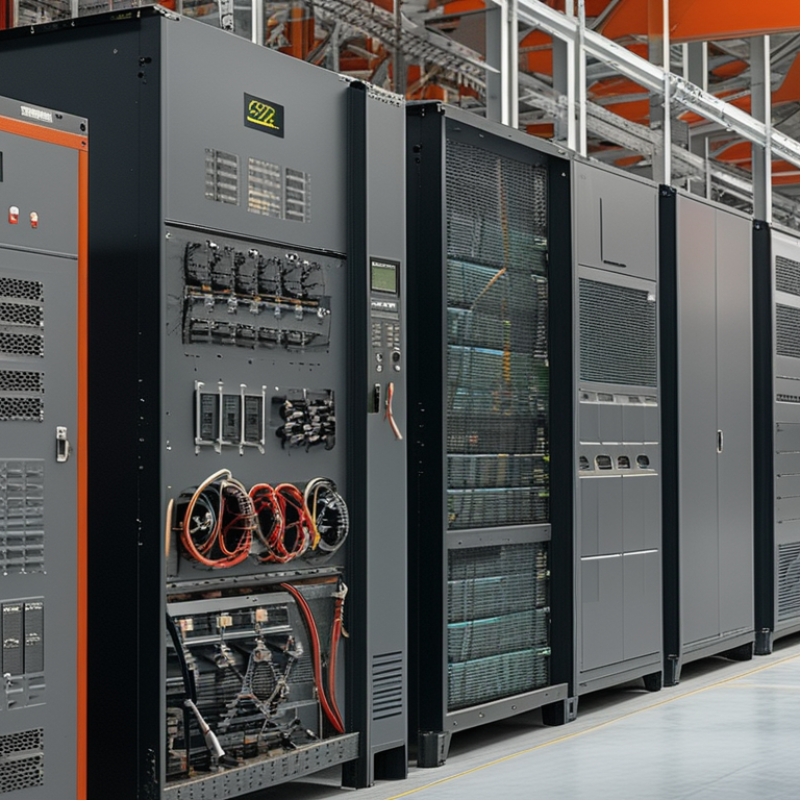
A backup power system keeps critical equipment running when the utility supply fails. It may combine batteries, an inverter, an automatic transfer switch, and a generator. The system must deliver stable voltage, fast switching, and predictable runtime. A server room may need a seamless transition within milliseconds. A warehouse may tolerate several seconds. That difference affects battery size, cooling, wiring, and maintenance planning.
Chinese suppliers are worth considering because China has a deep battery and power-electronics manufacturing base. The International Energy Agency reported in its 2024 Batteries and Secure Energy Transitions report that China produced about three-quarters of global lithium-ion batteries in 2023. This concentration can support competitive pricing, flexible configurations, and faster component sourcing. Scale helps. It does not prove quality. Buyers should verify cell traceability, thermal protection, factory testing, and regional safety compliance.
Reliability deserves more attention than purchase price. Uptime Institute’s 2024 Global Data Center Survey reported that 54% of respondents experienced an outage costing more than 100,000 US dollars. A supplier should provide load-bank results, battery degradation assumptions, alarm records, and clear replacement procedures. Ask for site references with similar climates and loads. A weakness remains: some projects overbuy capacity but underfund maintenance. I would rather specify realistic autonomy and test it regularly than trust an impressive brochure.
| Evaluation Dimension | Reliable Technical Data | Why It Matters | Recommended Supplier Requirement | Reference or Verification Method |
|---|---|---|---|---|
| Definition | A backup power system stores or supplies electrical energy when the utility grid fails, becomes unstable, or is intentionally disconnected. | It protects critical loads such as communication equipment, medical devices, security systems, servers, and industrial controls. | The supplier should provide a complete load analysis, backup-time calculation, wiring diagram, and operating sequence. | Review the single-line diagram, load list, and site commissioning documents. |
| System Architecture | Common configurations include UPS systems, battery energy storage systems, inverter-charger systems, and hybrid systems that combine batteries with solar or a generator. | The correct architecture depends on required transfer time, load type, operating duration, and whether renewable energy is available. | The supplier should clearly state the topology, operating modes, bypass arrangement, and compatibility with generators or photovoltaic systems. | Check the product datasheet, functional description, and factory acceptance test procedure. |
| Rated Power | Power is commonly specified in watts or kilowatts for real power and in volt-amperes or kilovolt-amperes for apparent power. | A system can overload even when the wattage appears acceptable if the load has a low power factor or high starting current. | Select a system after measuring continuous load, peak load, motor starting current, and future expansion requirements. | Request real-power and apparent-power ratings at the intended ambient temperature. |
| Backup Duration | Backup time depends on usable battery energy, load power, inverter efficiency, battery temperature, aging, and the permitted depth of discharge. | The nominal battery capacity alone does not guarantee the actual runtime available to the load. | Require a runtime curve or calculation for the exact load, battery configuration, temperature range, and end-of-discharge voltage. | Verify the calculation through a witnessed discharge test or an agreed commissioning test. |
| Battery Chemistry | Lead-acid batteries are widely used for lower upfront cost and established service practices. Lithium-ion batteries generally offer higher usable energy density, lower weight, and longer cycle capability when properly managed. | Chemistry affects cabinet size, ventilation, maintenance, cycle life, safety controls, transportation, and total cost of ownership. | The supplier should provide cell or battery specifications, battery-management functions, thermal protection, warranty conditions, and replacement procedures. | Review test reports, battery-management documentation, safety certifications, and transport documentation. |
| Transfer Time | Online double-conversion UPS systems normally supply the load through the inverter continuously. Standby and line-interactive systems may transfer the load when the utility supply changes. | Sensitive servers, medical equipment, and control systems may require uninterrupted power or a specified maximum transfer time. | The supplier must state transfer time for every operating mode and identify any loads that require an online topology. | Confirm the value in the datasheet and test it during acceptance testing. |
| Output Quality | Important specifications include output voltage, frequency, voltage regulation, frequency regulation, waveform, and total harmonic distortion. | Poor voltage or waveform quality can cause overheating, nuisance trips, malfunction, or reduced service life for connected equipment. | Require published output limits under no-load, linear-load, nonlinear-load, and battery-operation conditions. | Use power-quality measurements during factory and site testing. |
| Efficiency and Operating Cost | Efficiency varies with topology, load level, operating mode, temperature, and battery-conversion losses. It should not be represented by a single value without test conditions. | Higher efficiency reduces electricity consumption, heat generation, cooling demand, and long-term operating cost. | Ask for efficiency curves at several load levels, eco-mode limitations, standby consumption, and thermal-loss data. | Compare measured data under the same load and environmental conditions. |
| Input and Grid Compatibility | Mainland China commonly uses 220 V single-phase and 380 V three-phase nominal low-voltage supplies at 50 Hz. Export markets may use different voltage, frequency, plug, grounding, and grid requirements. | A system designed for one electrical environment may not be suitable for another without configuration changes or additional equipment. | The supplier should confirm input range, frequency range, phase configuration, neutral arrangement, grounding method, and local code requirements. | Match the electrical design with the project’s utility specification and local installer requirements. |
| Safety and Protection | Key protections include overcurrent, short circuit, overvoltage, undervoltage, overtemperature, overload, reverse polarity, insulation faults, and battery overcharge or over-discharge. | Protection functions reduce the risk of equipment damage, fire, electric shock, and unsafe battery operation. | Require a protection matrix, emergency shutdown method, fire-safety design, ventilation requirements, and maintenance access. | Check conformity with applicable electrical, battery, EMC, and installation standards. |
| Relevant Standards | Commonly applicable standards may include IEC 62040 for UPS systems, IEC 62477-1 for power electronic converter safety, IEC 62619 for industrial lithium secondary cells and batteries, and UN 38.3 transport testing for lithium batteries. | Standards help define safety, electromagnetic compatibility, performance, testing, and transportation requirements. | The supplier should identify the exact standard edition, product scope, test laboratory, certificate holder, and tested model configuration. | Validate certificates and reports with the issuing laboratory or certification body. |
| Why Consider Chinese Suppliers | China has extensive manufacturing capacity in power electronics, batteries, enclosures, transformers, monitoring hardware, and contract manufacturing. | A broad industrial supply chain can support product customization, component sourcing, production scaling, and integrated system delivery. | Select suppliers based on audited production capability, documented quality control, engineering resources, export experience, and after-sales support rather than price alone. | Conduct factory audits, review quality records, inspect samples, and verify references for similar applications. |
| Customization Capability | Backup power systems may require customized voltage, frequency, battery capacity, enclosure, communication protocol, monitoring interface, and mechanical dimensions. | Customization is often necessary for data centers, telecom sites, remote facilities, medical applications, and industrial environments. | Require a formal change-control process, engineering drawings, prototype approval, and a clear distinction between standard and customized components. | Review design documents, prototype test results, and the final bill of materials. |
| Quality Assurance | A dependable quality program normally includes incoming-material inspection, process controls, software and firmware control, end-of-line testing, traceability, and corrective-action procedures. | Documented controls reduce variation between production batches and make failures easier to investigate. | Request the inspection plan, test records, serial-number traceability, nonconformance process, and quality-management certification where applicable. | Use pre-shipment inspection and a written acceptance checklist. |
| Warranty and Service | Service quality depends on spare-parts availability, remote monitoring, response time, troubleshooting procedures, firmware support, and local technical coverage. | Fast diagnosis and available replacement parts can reduce downtime more effectively than a low purchase price. | Define warranty duration, covered parts, exclusions, response time, remote-support hours, training, spare-parts stock, and end-of-life notice requirements. | Include service-level requirements and escalation procedures in the purchase contract. |
Note: Technical values and compliance requirements vary by system topology, battery chemistry, installation location, and target market. Final specifications should be confirmed through project drawings, applicable local regulations, certified test reports, and site acceptance testing.
: Common options include UPS units, diesel generators, battery storage, solar-storage systems, hybrid systems, and portable power stations. Each suits different loads.
UPS systems provide nearly immediate protection during voltage drops or outages. They suit servers, control panels, and sensitive medical devices.
Generators support longer operating periods for buildings, factories, and remote facilities. They require fuel, ventilation, noise control, and regular maintenance.
Calculate running power, expected runtime, conversion losses, and startup surges. Do not check capacity alone. That mistake is common.
Request factory test records, wiring diagrams, battery cycle data, protection details, and warranty terms. Ask for production and spare-part information.
Connect realistic equipment, apply sudden loads, and measure voltage stability. Check alarms, restart behavior, remote access, and operating temperature.
Look for protection against overcharging, overheating, short circuits, and deep discharge. Thermal testing and clear shutdown procedures also matter.
No. Certifications support compliance, but they do not prove every field result. Review audit records, sample tests, traceability, and service response times.
Data rooms need reliable shutdown controls and thermal protection. Telecom sites may need 48-volt racks and cold-temperature performance. Homes usually need quiet operation and simple controls.
Delayed technical replies may indicate weak future support. I once focused too much on price and underestimated commissioning assistance. That was expensive.
A Backup Power System provides reliable electricity when the main grid fails, helping protect critical equipment, maintain business continuity, and support essential operations. Chinese suppliers offer a broad range of solutions, including uninterruptible power supplies, battery energy storage systems, diesel or gas generators, solar hybrid systems, and portable power units. Their advantages may include flexible customization, competitive manufacturing costs, scalable production, and access to diverse technical configurations for residential, commercial, industrial, and emergency applications.
When evaluating China’s Backup Power System suppliers, buyers should examine product performance, battery quality, system efficiency, safety design, warranty terms, after-sales support, production capacity, and export experience. Relevant certifications, testing procedures, and compliance with applicable international standards are also important indicators of reliability. The best supplier should be selected according to power demand, backup duration, installation environment, budget, maintenance requirements, and future expansion plans. Clear communication, transparent documentation, sample testing, and a well-defined service agreement can further reduce purchasing risks and support long-term cooperation.

 EVS Powers